
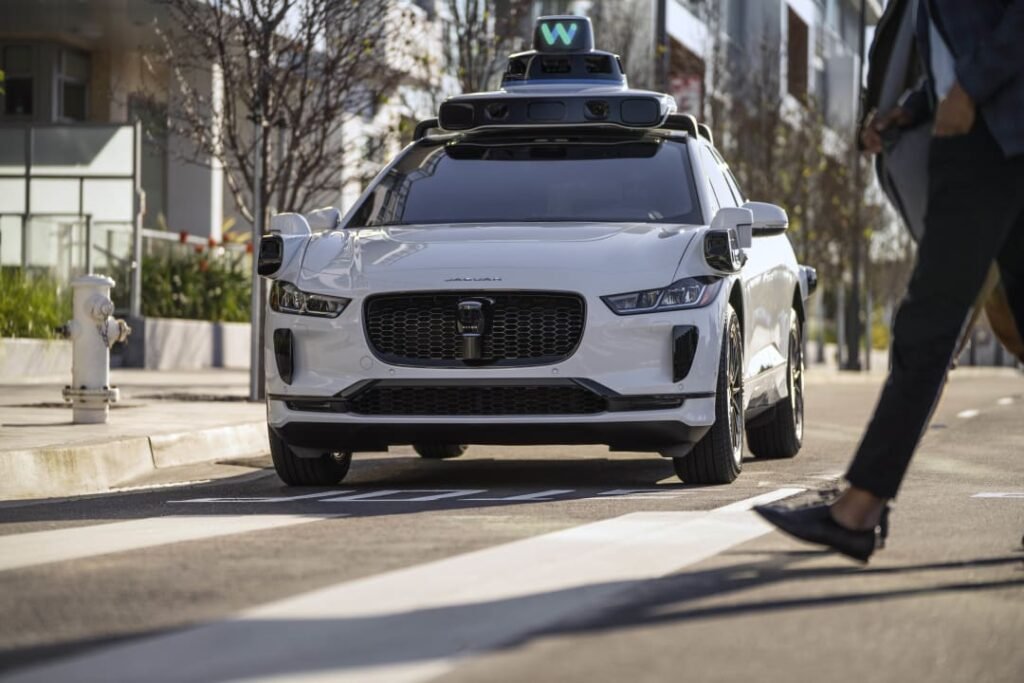

Waymo Highway Access Unlocked: Driverless Cars Now on Freeways
Waymo highway access has officially begun, launching a new era of autonomous ride-hailing. The company’s driverless robotaxis are now cleared to operate on highways and interstates across key U.S. regions, marking the most significant expansion in Waymo’s history.
For the first time, riders can request a Waymo and take a continuous, high-speed freeway trip without a human safety driver. This move allows for fully driverless cars to travel between major hubs such as downtown San Francisco, Silicon Valley, and regional airports, routes that previously required hand-offs or conventional ride-hail vehicles. This opens the door to broader adoption, longer journeys, and a more viable alternative to traditional taxi and rideshare services.

Source: Unsplash
https://www.facebook.com/reel/724669693360752
A New Era: Driverless Airport Runs and City-to-City Trips
Waymo confirmed its robotaxis will begin operating along corridors like U.S.-101 in the Bay Area, with Los Angeles and Phoenix also gaining freeway capabilities. Until now, the service was restricted to surface streets and predefined urban zones. (Waymo highway access)
This expansion is what enables true, practical airport runs. Riders can now book a robotaxi for cross-city commutes and suburb-to-downtown trips without switching vehicles, transforming Waymo from an urban novelty into a practical substitute for longer-distance travel.

Where Will the New Routes Go?
In the Bay Area, the service is expanding to cover the entire peninsula from San Francisco south to San Jose, including curbside service at San Jose Mineta International Airport (SJC).
In Los Angeles and Phoenix, highway routes will connect existing service zones. Waymo also plans to add highway routes to its existing services in Atlanta and Austin, Texas, in the near future.
A Major Technical and Regulatory Shift
The highway rollout signals growing confidence in the company’s autonomous stack, which must now manage high-speed merges, lane changes, and complex interchanges—challenges far beyond low-speed city driving.
The shift to highways increases operational complexity, energy demand, and real-world exposure. It also brings Waymo into more direct competition with both traditional ride-hail providers and other autonomous developers.

The NHTSA School Bus Investigation
This expansion comes as U.S. regulators continue to scrutinize the safety of autonomous vehicles. Last month, the NHTSA opened an investigation into Waymo after a driverless taxi in Atlanta failed to yield to a stopped school bus that reportedly had its stop arm extended and lights flashing.
Waymo has stated it is cooperating with the investigation and has already issued software updates to address the scenario. Despite this, Waymo has continued to scale its service with minimal interruption, leveraging years of controlled deployments.
Global Ambitions: From New York to London
The highway approval in its key markets is part of a much larger global expansion. Waymo began testing in New York City in August 2025, placing its robotaxis in one of the most challenging traffic environments in the U.S.
Internationally, the company has confirmed its next conquest is London, with plans to launch a service to rival the city’s iconic black cabs in 2026.

What It Means for Riders and the Industry
For the industry, Waymo’s move to freeways marks a crucial step toward scalable, revenue-generating autonomous fleets capable of replacing large portions of the human-driven rideshare economy. For regulators, it begins a new chapter where autonomous vehicles must meet highway-level safety expectations, speed, and reliability at scale.
Also Read – GAC Emzoom Australia Launch: Full Specs for New MG ZS Rival


Pingback: Genesis GV90 Coach Doors Confirmed In New Spy Photos - Mechhelp