
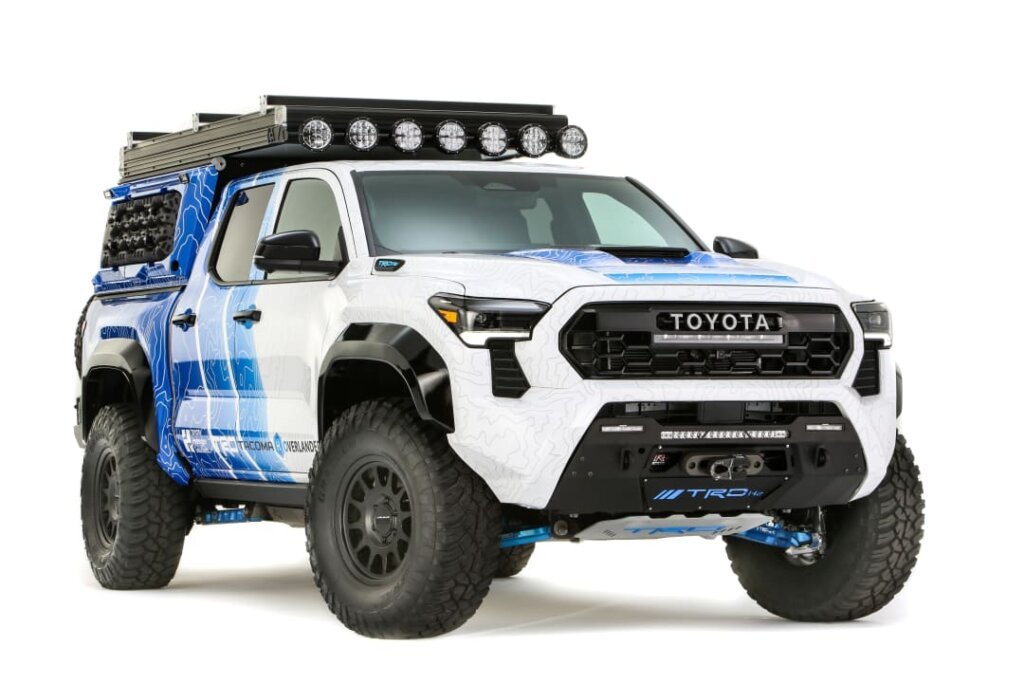

Toyota Turns Tacoma Into 547-HP Hydrogen-Powered Off-Roader with Genius Water Recovery System
Toyota is pushing the limits of hydrogen power and off-road capability with the unveiling of the Tacoma H2-Overlander Concept at this year’s SEMA Show. This extreme concept transforms a standard Tacoma into a high-horsepower, zero-emission adventure pickup. It features a dual-electric-motor setup producing a formidable 547 horsepower, drawing power from a second-generation Mirai fuel cell stack and three hydrogen tanks. The most impressive innovation is its patent-pending TRD exhaust water recovery system, which captures and filters the water byproduct of the fuel cell, making it usable for washing and showering on long overlanding trips.


Hydrogen Power Meets Off-Road Muscle
The Tacoma H2-Overlander Concept is a testament to the versatility of hydrogen fuel cell technology.
- Extreme Power: The concept features dual electric motors that produce a combined 547 horsepower, routed through a front limited-slip differential and a rear electronic locking differential.
- Fuel Cell System: It uses a second-generation fuel cell stack from the Toyota Mirai. The system includes three hydrogen tanks with a capacity of 6 kg (just over 13 pounds) and a 24.9-kWh lithium-ion battery.
- Off-Road Hardware: The true four-wheel-drive truck is equipped with heavy-duty Fox 2.5 Performance Elite Series shocks, a Tundra front brake upgrade, custom wheels, and aggressive off-road tires.
- TRD Engineering: The Toyota Racing Development (TRD) teams managed the complex transformation from a gasoline-powered Tacoma on the TNGA-F platform to a hydrogen vehicle, building the fully integrated concept on a “tight timeline”.


Genius Water Recovery System for Overlanding
The H2-Overlander Concept’s most brilliant feature solves a critical problem for long-distance adventurers.
- Closed-Loop System: The patent-pending TRD exhaust water recovery system captures and filters the water produced as a byproduct of the hydrogen fuel cell stack.
- Usable Water: The recovered water is distilled and mineral-free, making it suitable for washing and showering. This feature is a game-changer for overlanding, as it eliminates the need to carry large water reserves for ablution facilities.
- Environmental Design: The butch exterior design features environmentally conscious elements, including recycled carbon-fiber aero panels, off-road front/rear bumpers, and integrated recovery points.


Hydrogen’s Future: A Race Against Infrastructure
While the Tacoma H2-Overlander Concept showcases hydrogen’s potential, the technology faces major challenges in the U.S. market.
- Infrastructure Hurdle: There are currently under 20,000 hydrogen fuel cell vehicles on the road in the U.S., with the vast majority located in California. The limited infrastructure is a major stumbling block for mass adoption.
- Toyota’s Commitment: Despite the challenges, Toyota is “forging ahead” with hydrogen tech, betting that its long-distance capability, quick refueling, and zero tailpipe emissions will eventually make it ideal for trucks and heavy transport.
- Legal Challenges: Toyota is also facing a class action lawsuit from Mirai owners who claim the automaker misled them about the availability of the required charging infrastructure.
Final Thoughts
The Tacoma H2-Overlander Concept is a bold statement from Toyota that its hydrogen journey is far from over. It successfully merges cutting-edge clean-energy technology with TRD’s off-road heritage. The unique water recovery system, designed for long-haul off-grid use, transforms the fuel cell’s byproduct into a practical asset, making the H2-Overlander Concept a genuinely transformative concept for the future of sustainable adventure vehicles. If hydrogen infrastructure catches up, Toyota will be perfectly positioned to lead the segment.
Also Read – Urban Automotive & Heritage Customs Create Modern V8 Crew Cab: Defender 130 V8 Pickup Unveiled


Pingback: Dodge Durango Hellcat Fully Optioned Hits $118K: The Most Expensive V8 Muscle SUV - Mechhelp