

Shocking Truth: How OTA Updates Resale Value Can Tank Your Trade-In!
Over-the-air (OTA) updates sound impressive when you are buying a car, offering the promise of a vehicle that improves over time. However, when it comes time to sell, the reality of OTA Updates Resale Value can be a financial nightmare. Resale value ultimately comes down to cold auction math, and if your expensive software upgrades don’t follow the strict rules of the used market, you could be throwing thousands of dollars away.
The Cold Hard Math of Auctions
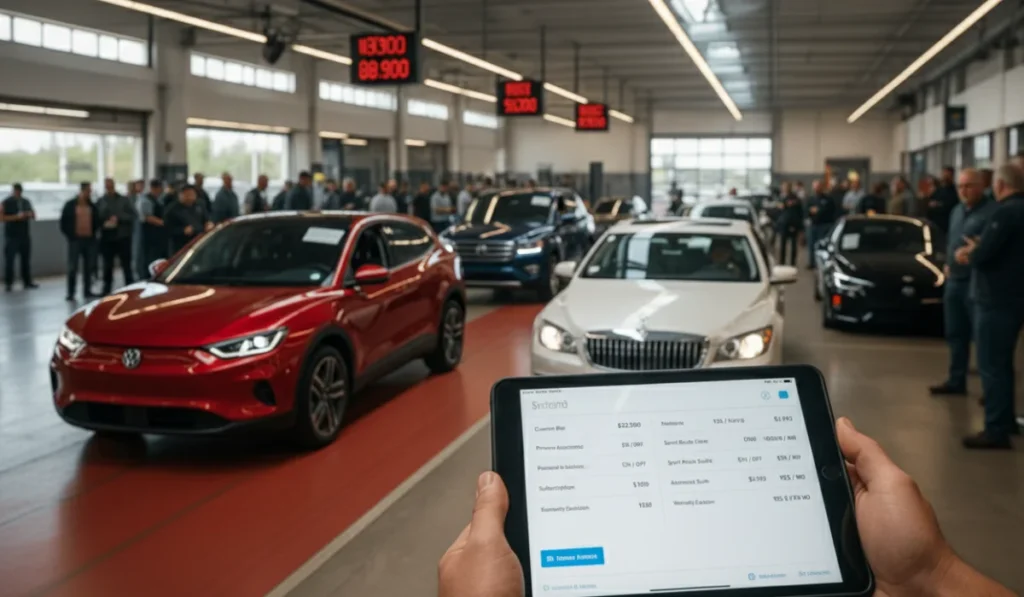
Dealers don’t pay for feelings; they pay what the Manheim Used Vehicle Value Index tells them to pay. In the wholesale lanes, auction bidders only care about one thing: features the next owner can actually use.
This creates a binary outcome for your trade-in value. If your software upgrade is locked to the VIN and moves to the next owner automatically, you get credit for it. If it isn’t, dealers price the car as if you never bought it. That is the brutal difference between getting paid for your investment and getting nothing.
If It Doesn’t Transfer, It’s Worthless
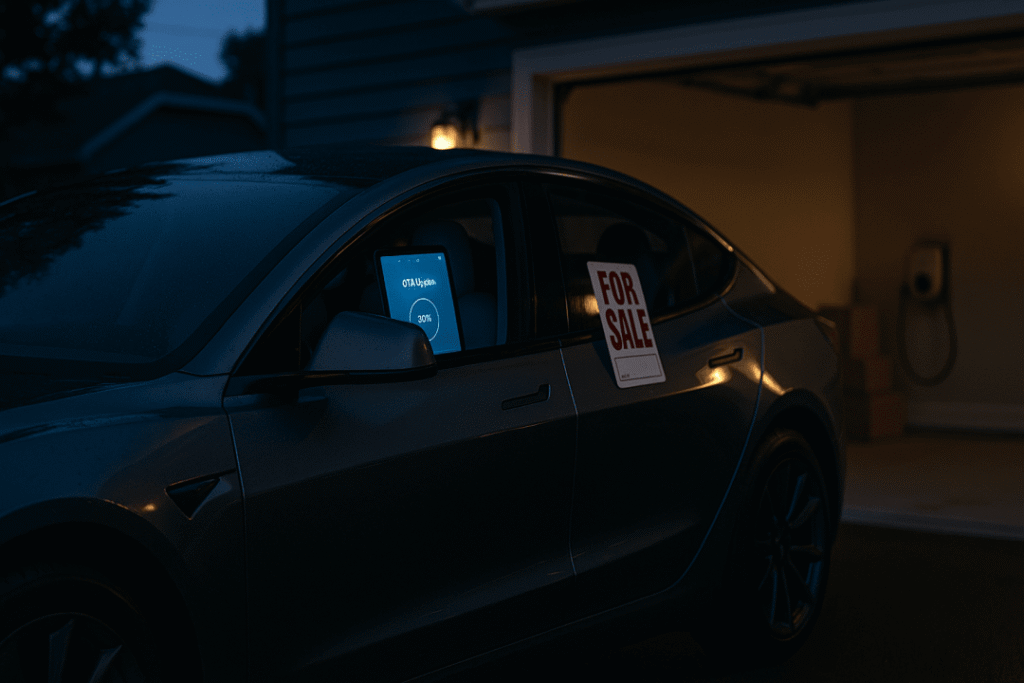
This is the golden rule of modern car ownership: If the feature transfers, you win. If it doesn’t, you eat the cost.
Take Tesla’s Full Self-Driving (Supervised) as the prime example. While transfer promotions are rare, if FSD is active on the car at the time of sale, it stays with that specific VIN. Because the next owner can use it, dealers will price it into their offer. If the software is tied to your personal account and vanishes when you log out, the auction lanes treat the car as a “no-FSD” unit, full stop.
Why Dealers Hate Subscriptions
Shoppers generally dislike paying rent on their hardware, and dealers know this. Cox Automotive’s consumer research found weak enthusiasm for subscription-only features.
Auctions reflect this sentiment aggressively. A monthly-fee unlock (like a heated seat subscription) rarely lifts the “hammer price” of a vehicle because it’s a liability, not an asset. One-time performance boosts and permanent driver-assist packs help OTA Updates Resale Value the most, but only when they are VIN-tied and clearly documented on the condition report.
Expert Analysis: How to Protect Your Investment
As vehicles become more like smartphones, “buying code” is becoming as common as buying leather seats. But unlike leather seats, code can disappear. Here is how to ensure you don’t lose your shirt at the trade-in desk.
Rule 1: Buy “Sticky” Software
Before you tap “purchase” on that screen, check the terms. Only buy options that are VIN-tied and transferable. If a feature is account-based or requires a monthly subscription, expect zero credit for it when you sell the car.
Rule 2: Document Everything
Auction buyers and appraisers pay for what is on paper, not what you claim you “once downloaded.” Keep your receipts, the original window sticker, and any digital confirmation that proves the features stay with the car. If you can’t prove it transfers, they won’t pay for it.
Rule 3: Price Reality Into Your Decision
Used EV prices have cooled significantly faster than gas cars, according to recent analysis from iSeeCars. This depreciation drags software premiums down with it. In a market worried about range anxiety and charging, software only adds OTA Updates Resale Value when it is durable, obvious, and permanent.
Conclusion
The era of OTA Updates Resale Value has introduced a new complexity to selling your car. You paid real cash for those updates, but to see that money again, the feature has to live on the car, survive the ownership change, and be obvious at sale time.
If it’s a subscription that vanishes, expect little lift at trade-in. If it transfers cleanly, you’ll feel it in your wallet—just like a popular trim level that improves the car’s desirability for the next driver.
Have you ever lost money on a software feature when trading in a car? Share your story below!
Also Read – New Kia Tasman ARB Accessories Revealed: A Rugged Rescue Plan


Pingback: Modified 2007 Honda S2000 For Sale: A Supercharged 365 HP Beast!