
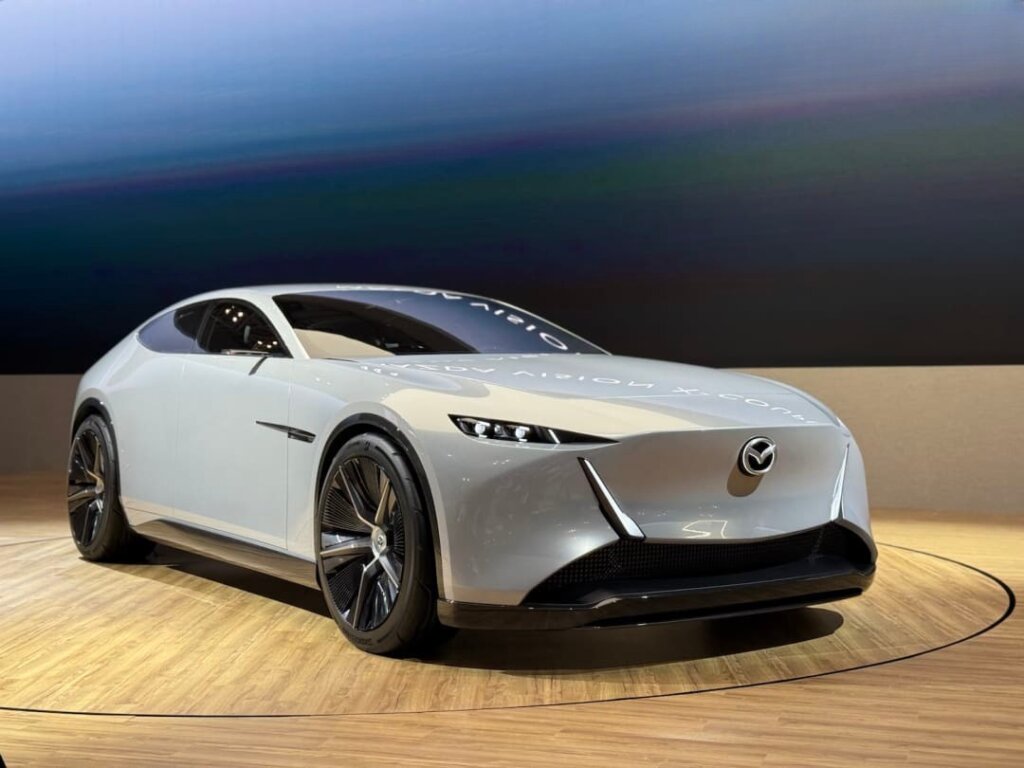

Mazda New Wankel-Powered Concept Promises to Clean the Air “The More You Drive”
At the Japan Mobility Show, Mazda unveiled the Vision X-Coupe Concept, a striking prototype that not only revives its iconic Wankel rotary engine but also debuts a revolutionary emissions technology. The concept features a twin-rotor rotary turbo plug-in hybrid system capable of capturing CO2 directly from its exhaust, a technology called “Mazda Mobile Carbon Capture.” The goal, as stated by CEO Masahiro Moro, is to “envisions a future where the more kilometers you drive, the more you help reduce CO2,” theoretically allowing the car to leave the air cleaner than before. The 500-horsepower concept is set for a rigorous real-world test next month in a Super Taikyu endurance race.
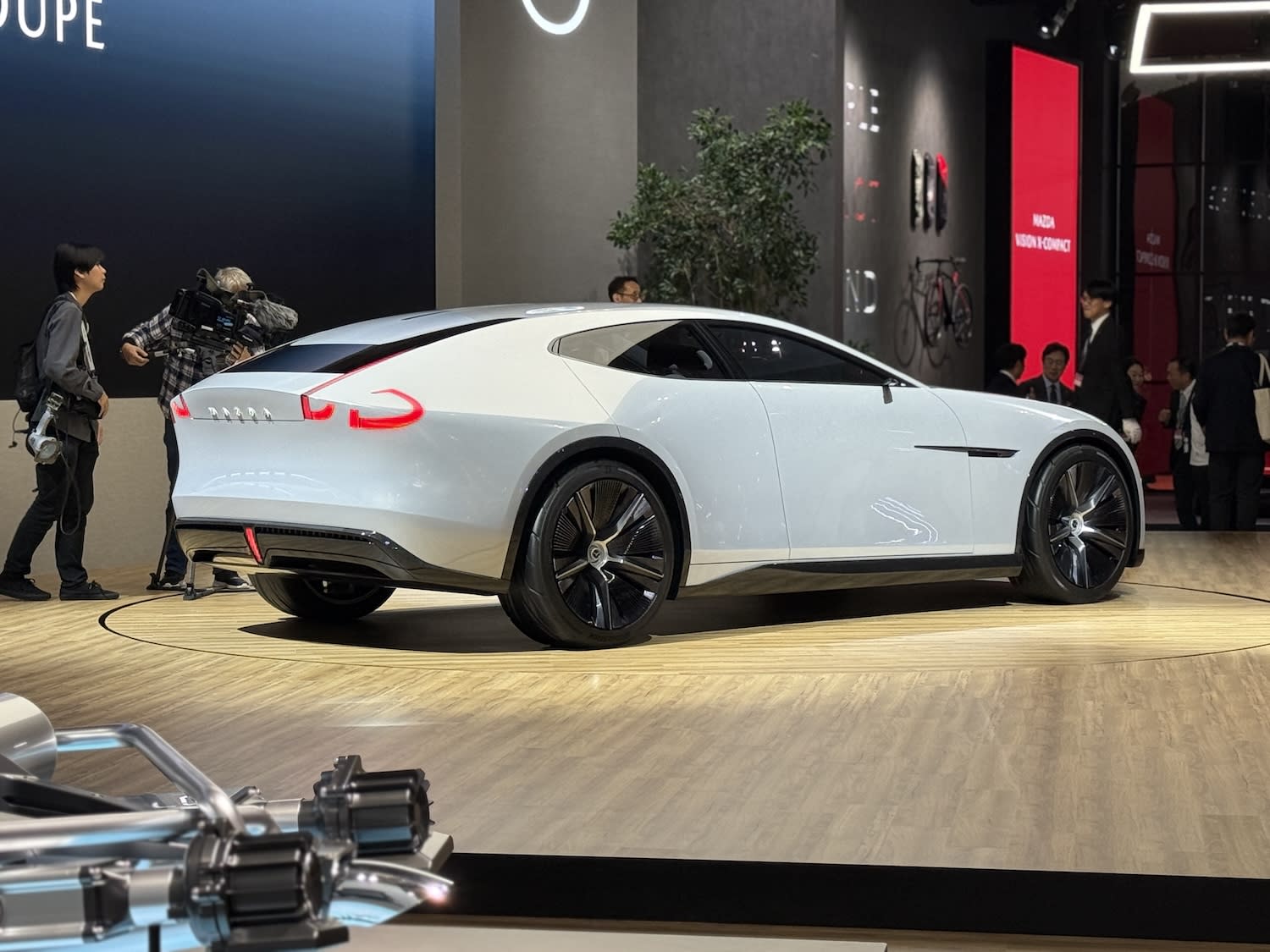
Rotary Revival: A High-Performance Hybrid
The Vision X-Coupe shows Mazda’s enduring commitment to the rotary engine, transforming it into an efficient range extender.
- Engine: Features a new, turbocharged twin-rotor Wankel rotary engine.
- Powertrain Type: The vehicle is an Extended-Range Electric Vehicle (E-REV) or plug-in hybrid, where the rotary engine serves as a generator, not directly powering the wheels. This allows the engine to operate within an optimum RPM range (the “sweet spot”) to maximize efficiency and minimize emissions.
- Performance Output: The hybrid system produces a total system output of 503 horsepower (510 PS).
- Range: The car offers an estimated 100 miles of all-electric driving (WLTP cycle) and a total combined range of up to 500 miles (800 km).
- Fuel Source: The Wankel engine is capable of running on carbon-neutral artificial fuels, such as one Mazda is experimenting with that is made from microalgae.
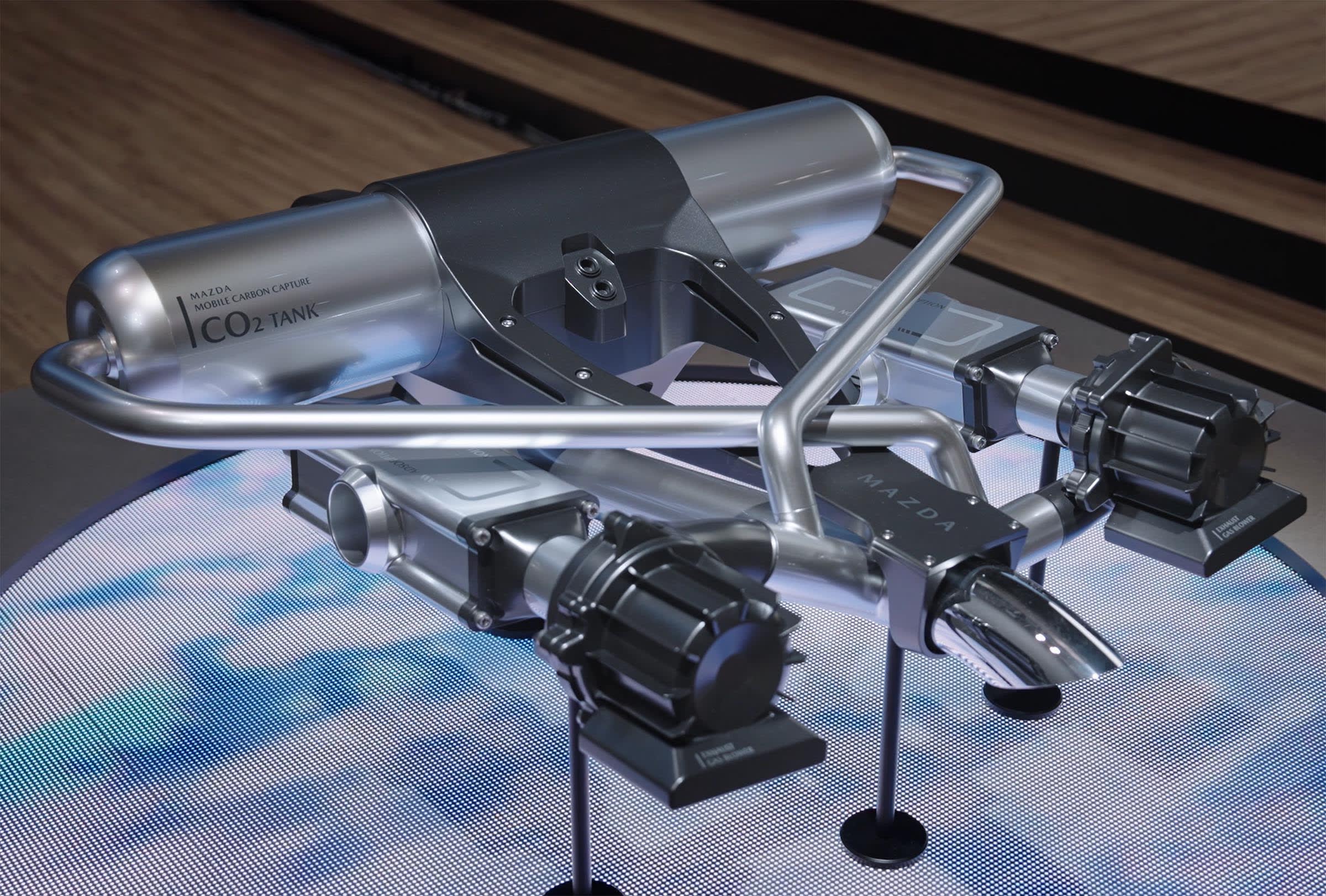
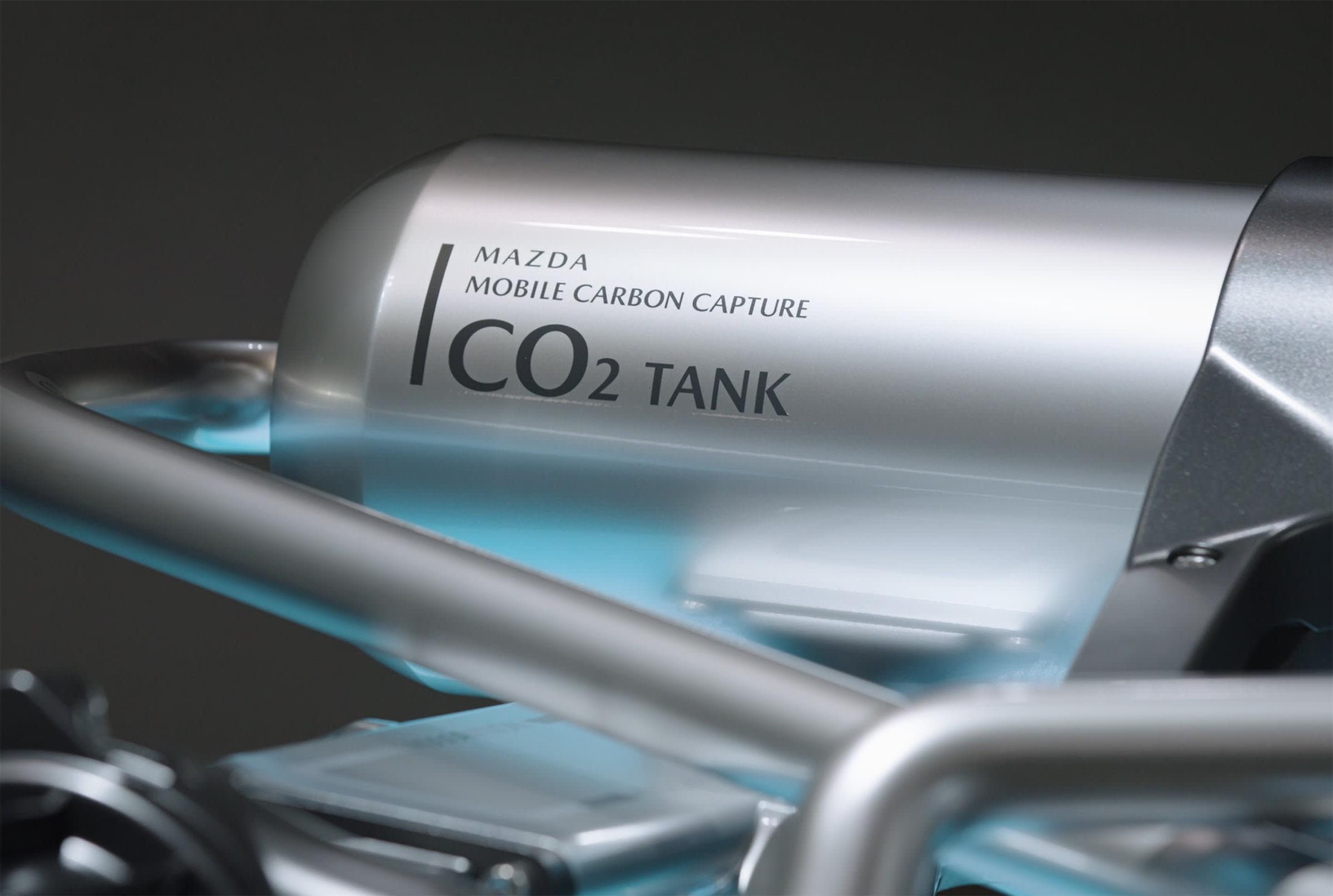
Mobile Carbon Capture: A Cleaner Combustion Goal
The most audacious claim is the development of technology to actively reduce atmospheric carbon.
- “Mazda Mobile Carbon Capture”: This device is designed to “suck C02 out of the exhaust” and store it in an onboard holding tank.
- Real-World Test: Mazda is putting the system through a highly challenging real-world test, fitting it onto a Mazda Spirit Racing car competing in the upcoming Super Taikyu endurance racing series.
- The Theory: The overall concept is that the carbon-neutral biofuel absorbs CO2 while growing, and the mobile capture system then traps the exhaust CO2 before it reaches the atmosphere. If enough CO2 is captured, the vehicle becomes effectively carbon-negative, or “the more kilometers you drive, the more you help reduce CO2”. Capturing CO2 from the exhaust (where concentration is higher) is more efficient than direct air capture.
- Future Use: The captured gas could later be sequestered or used for other purposes, such as the production of alternative fuels or high-performance carbon materials.
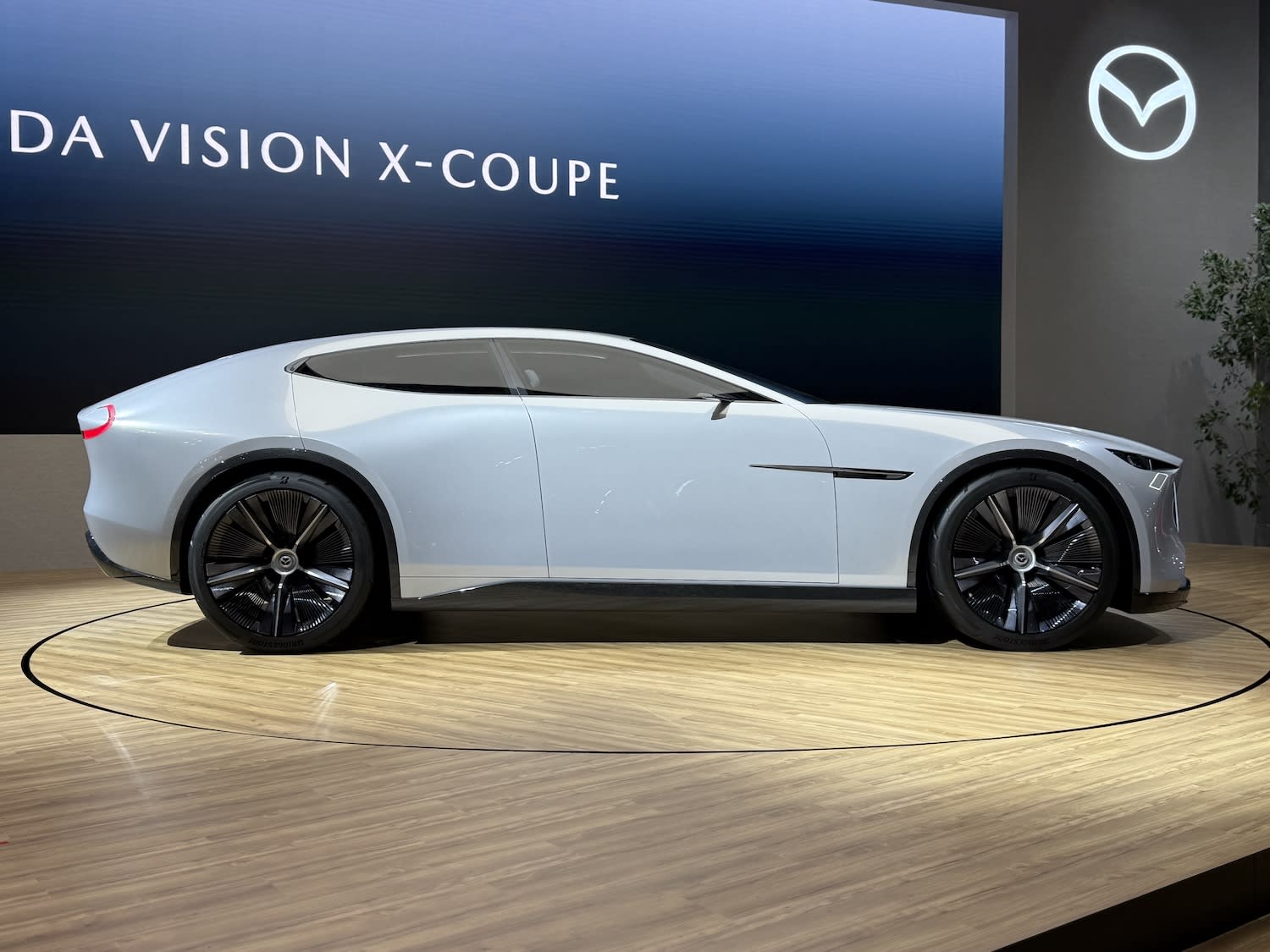
Kodo Design and Future Context
The Vision X-Coupe also showcases the continued evolution of Mazda’s celebrated design language.
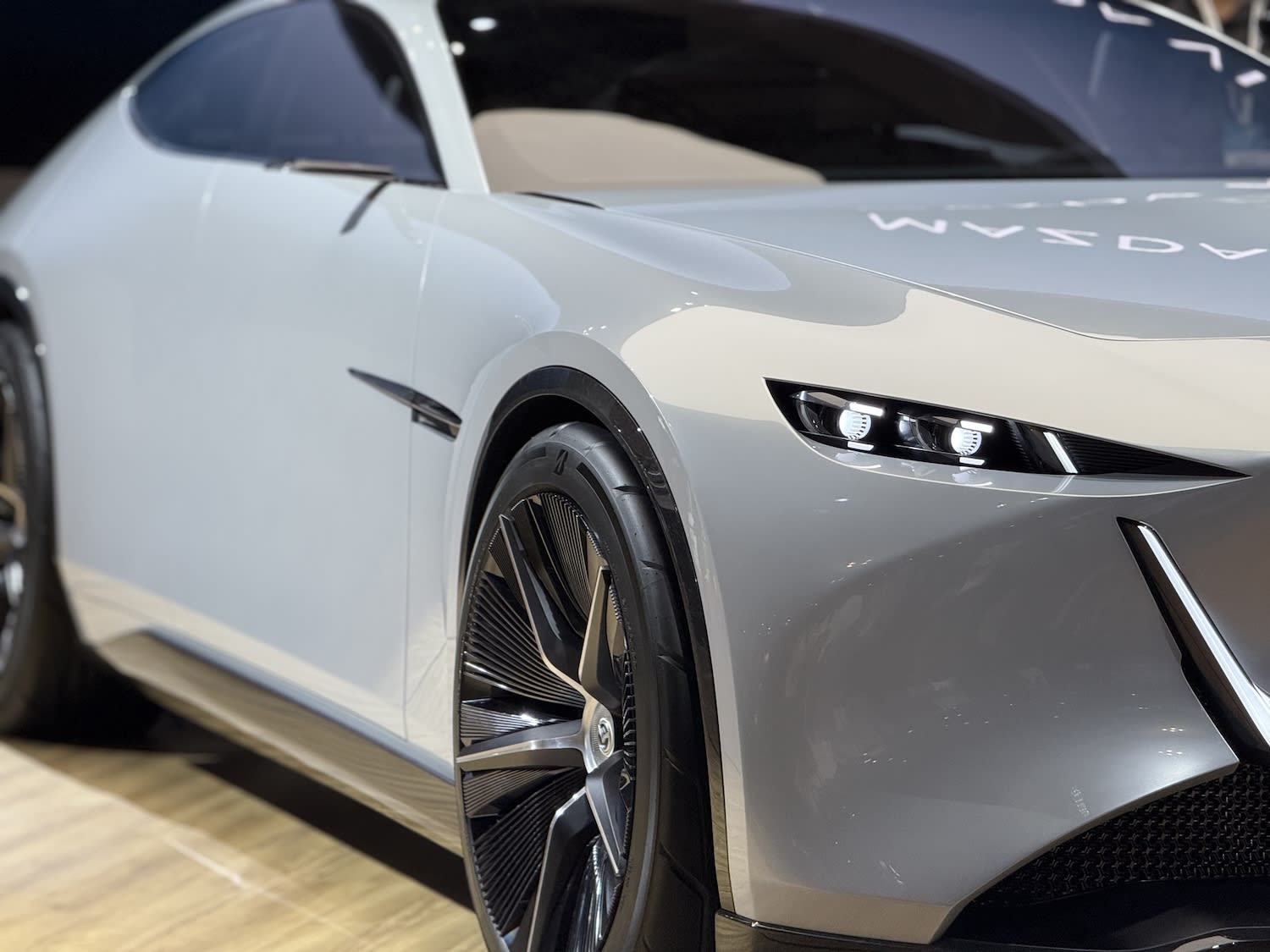
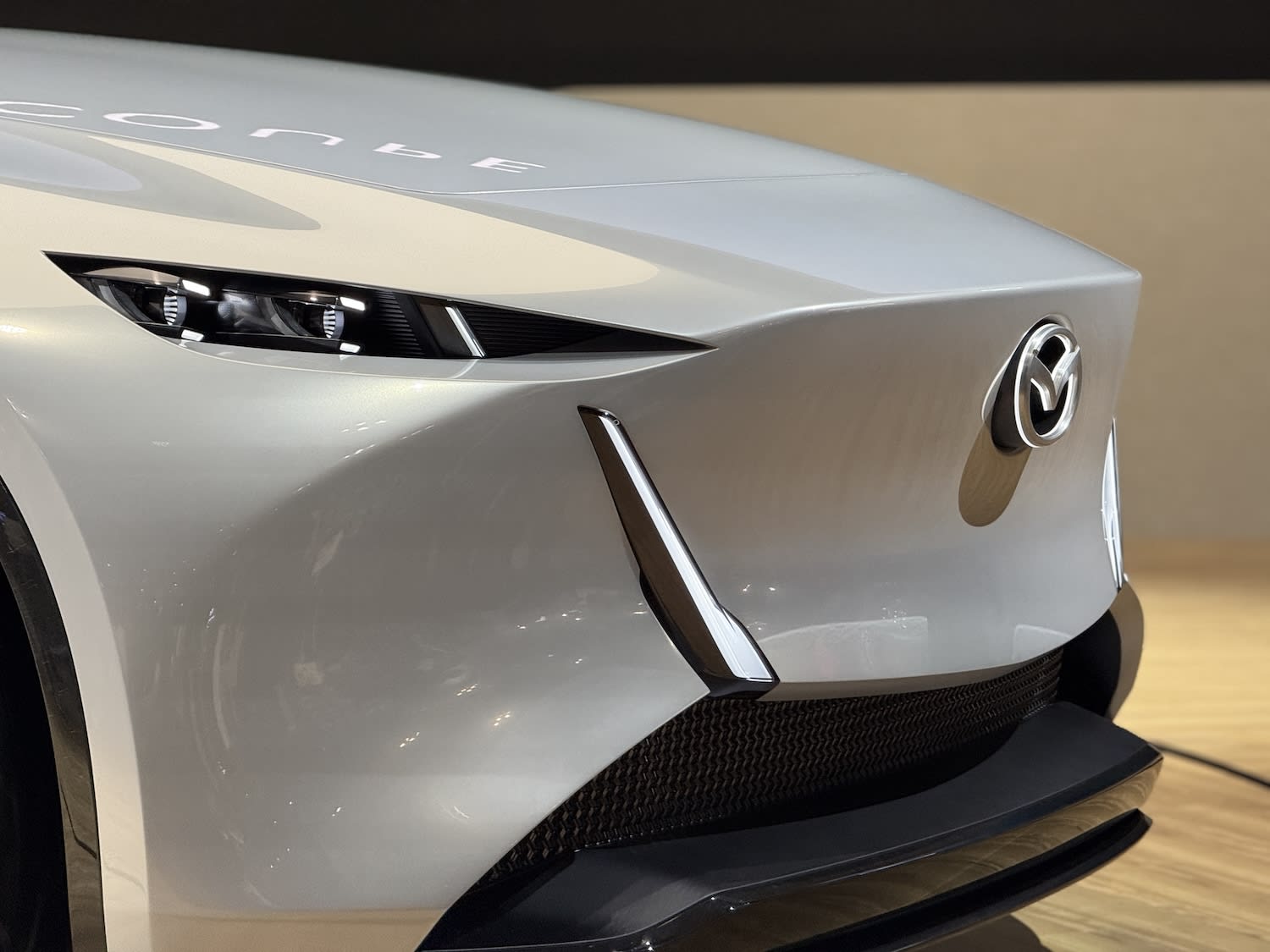
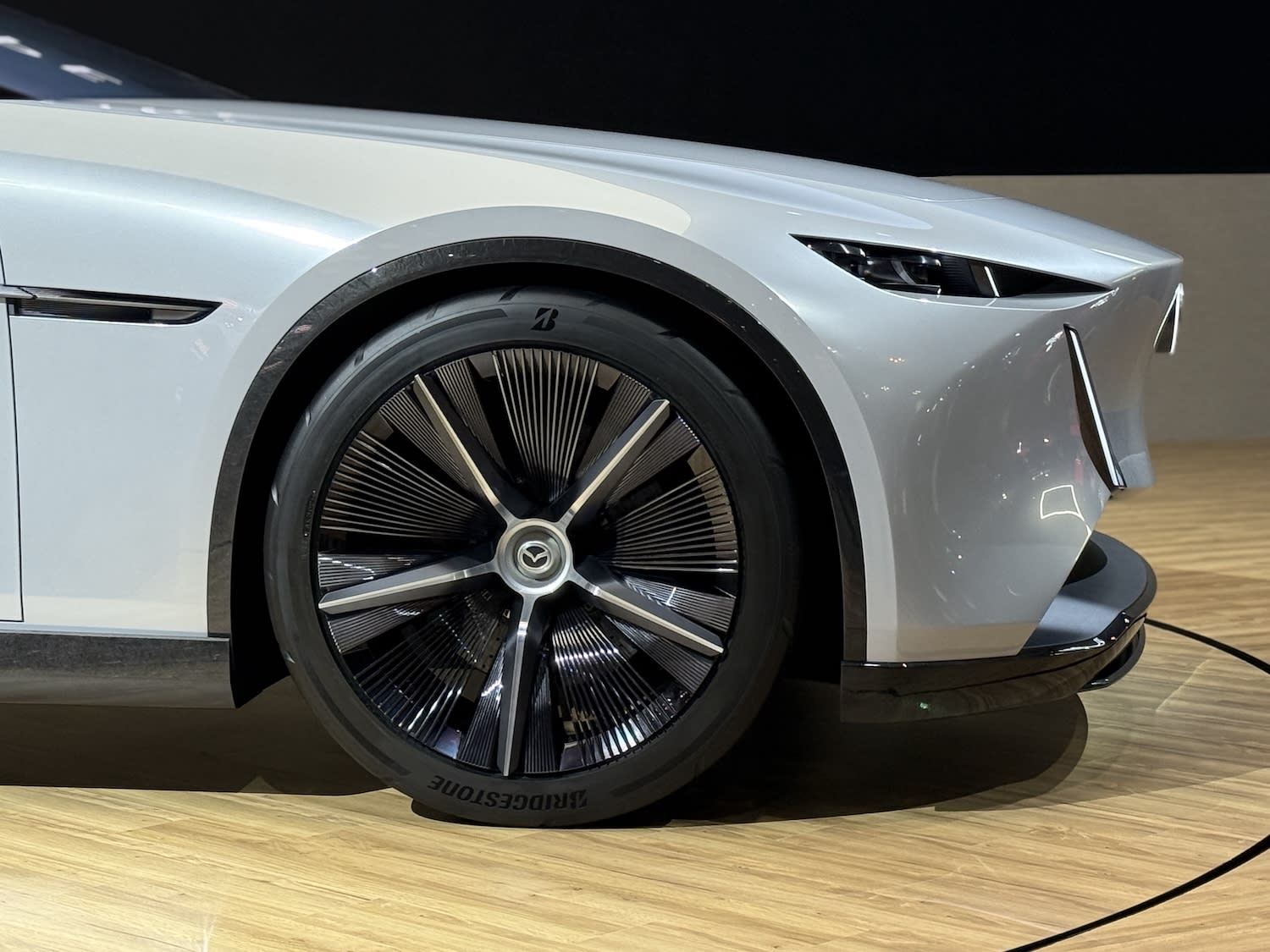
- Design Language: The concept is the latest example of Mazda’s “Kodo Soul of Motion” design language, presented as a sleek coupe-sedan.
- Dimensions: The show car is physically large, measuring 198.8 inches long with a 121.7-inch wheelbase, making it about 7 inches longer than the discontinued Mazda6 sedan.
- Production Outlook: While its production future is uncertain, the concept demonstrates how the Wankel engine could find a new place in Mazda’s future lineup.
Final Thoughts
The Mazda Vision X-Coupe Concept is Mazda at its most innovative, boldly using the internal combustion engine (ICE) as a solution for a cleaner future rather than an obsolete problem. The fusion of a high-performance rotary hybrid, carbon-neutral fuel, and active carbon capture technology is a daring counterpunch to the all-electric trend. By testing this technology in a punishing endurance race, Mazda is seeking to validate its claim that clean and engaging driving can coexist, making this not just a stunning car, but one of the most intellectually ambitious concepts to emerge from the Japan Mobility Show.


Pingback: BYD Racco Electric Kei Car Debuts In Japan: China Challenges Domestic Brands With $17,000 Micro EV - Mechhelp