
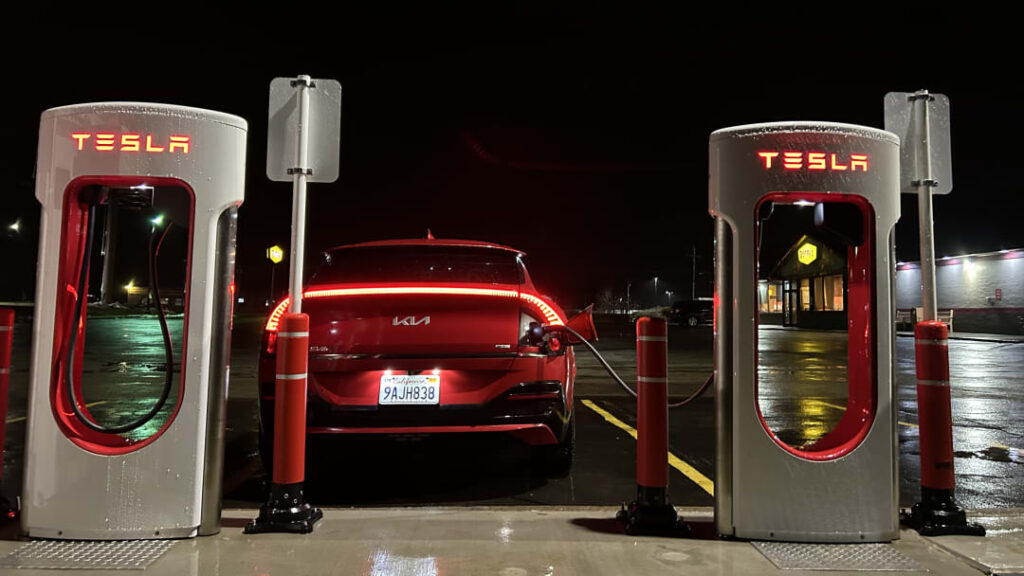

Hyundai Kia EV slow charging on Tesla Superchargers: The 800V Problem
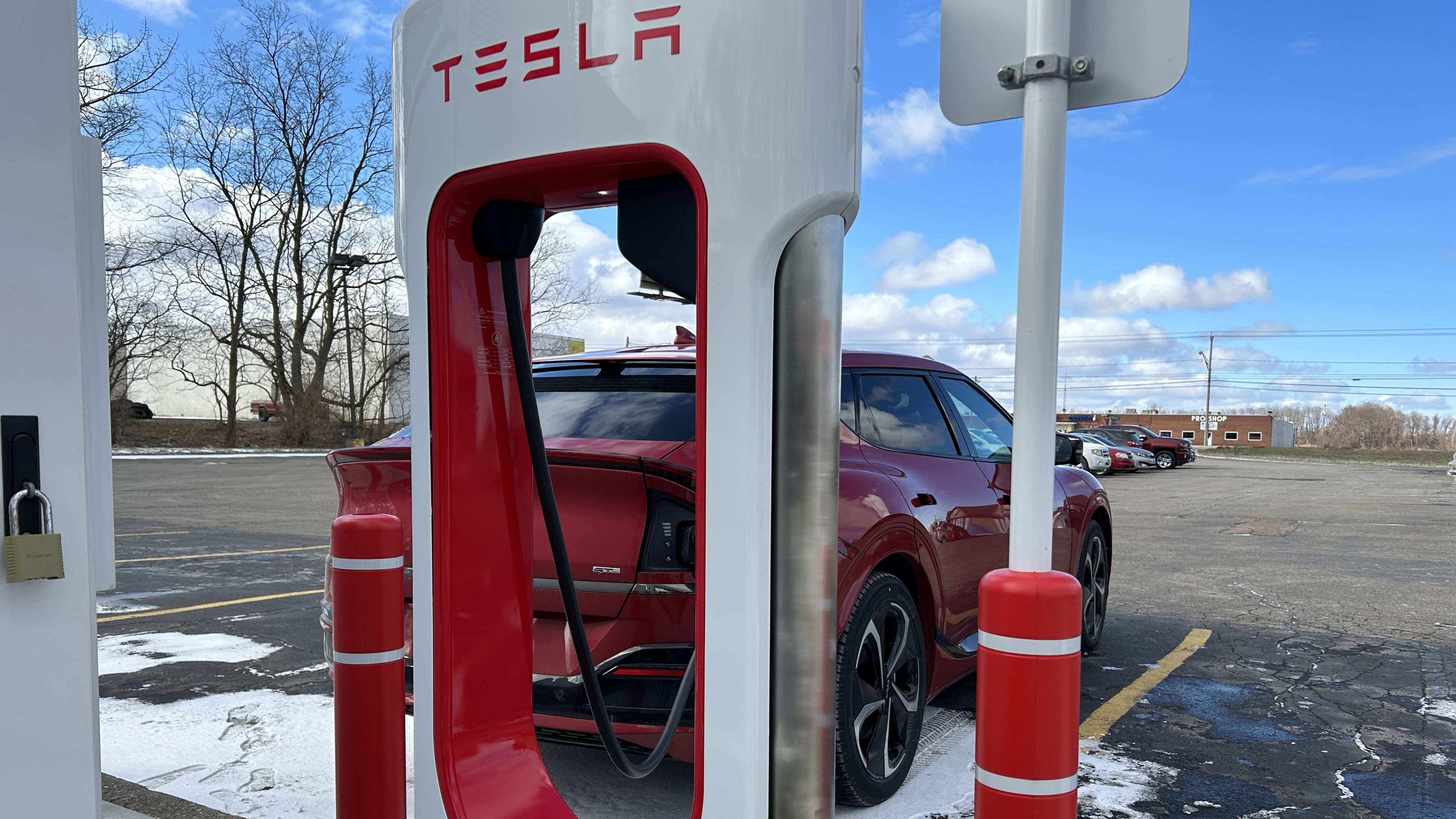
Over the last year, both Kia and Hyundai began adding Supercharger capability for their electric vehicles, opening up access to thousands of fast chargers. However, many E-GMP owners have run into a frustrating bottleneck: their car is charging far slower than its potential. The Hyundai Kia EV slow charging issue on the Tesla network is a simple case of voltage incompatibility between the two architectures.
While this convenience is tempting, owners of models like the Ioniq 5, EV6, and EV9 should think twice before plugging into a Tesla V3 station, as they will not achieve the quick charging speeds they are accustomed to.
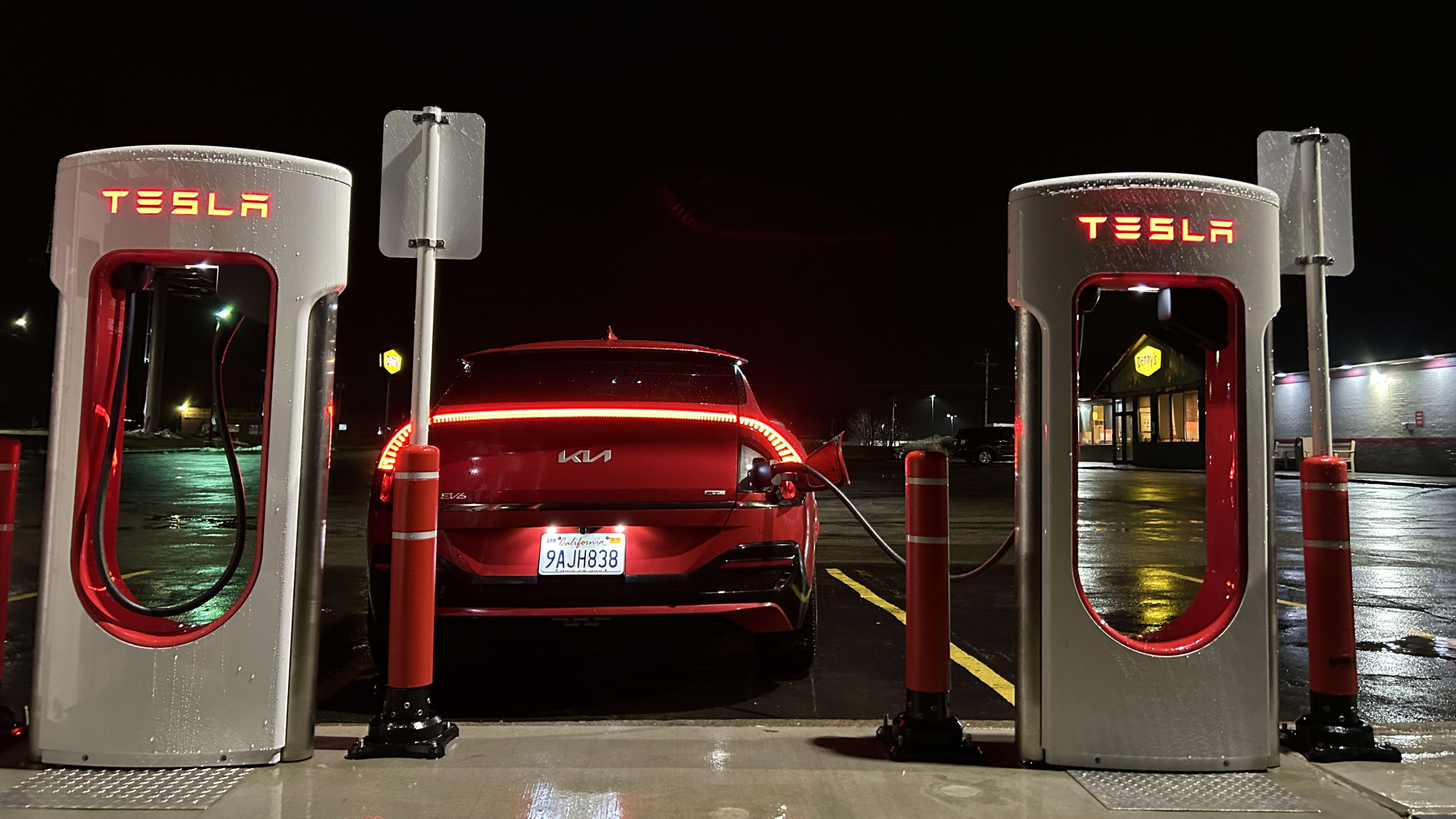
Here is a look at the technical disconnect and the future solution.
The Technical Disconnect: 800V vs. 500V
The fastest charging electric cars on the road today, including Kia and Hyundai’s E-GMP lineup, rely on 800-volt architecture. This high-voltage system allows the cars to charge at way over 200 kW (up to 260 kW for the Ioniq 5 and 235 kW for the EV6), achieving a 10% to 80% charge in as little as 20 minutes on a dedicated 800-volt station (like Electrify America or IONNA).
However, the current generation of Tesla V3 Superchargers operates at a lower 500-volt architecture.
| Charging System | E-GMP Car (Max Speed) | Tesla V3 Supercharger (Output) | Resulting Charging Speed |
| Compatible Charger | 220–260 kW | N/A (Dedicated 800V unit) | Fastest (20-min 10–80%) |
| Tesla Supercharger | 220–260 kW | 500 Volts (Max) | Slow (90–120 kW) |
When the voltages don’t align, the 800V Korean cars must utilize an onboard voltage booster to interface with the lower-voltage Supercharger plug. This conversion process acts as a bottleneck, dramatically reducing charging efficiency and speeds, with some tests showing sustained speeds capped between 90 kW and 120 kW—or sometimes as low as 42 kW.
The Future Fix: V4 Superchargers
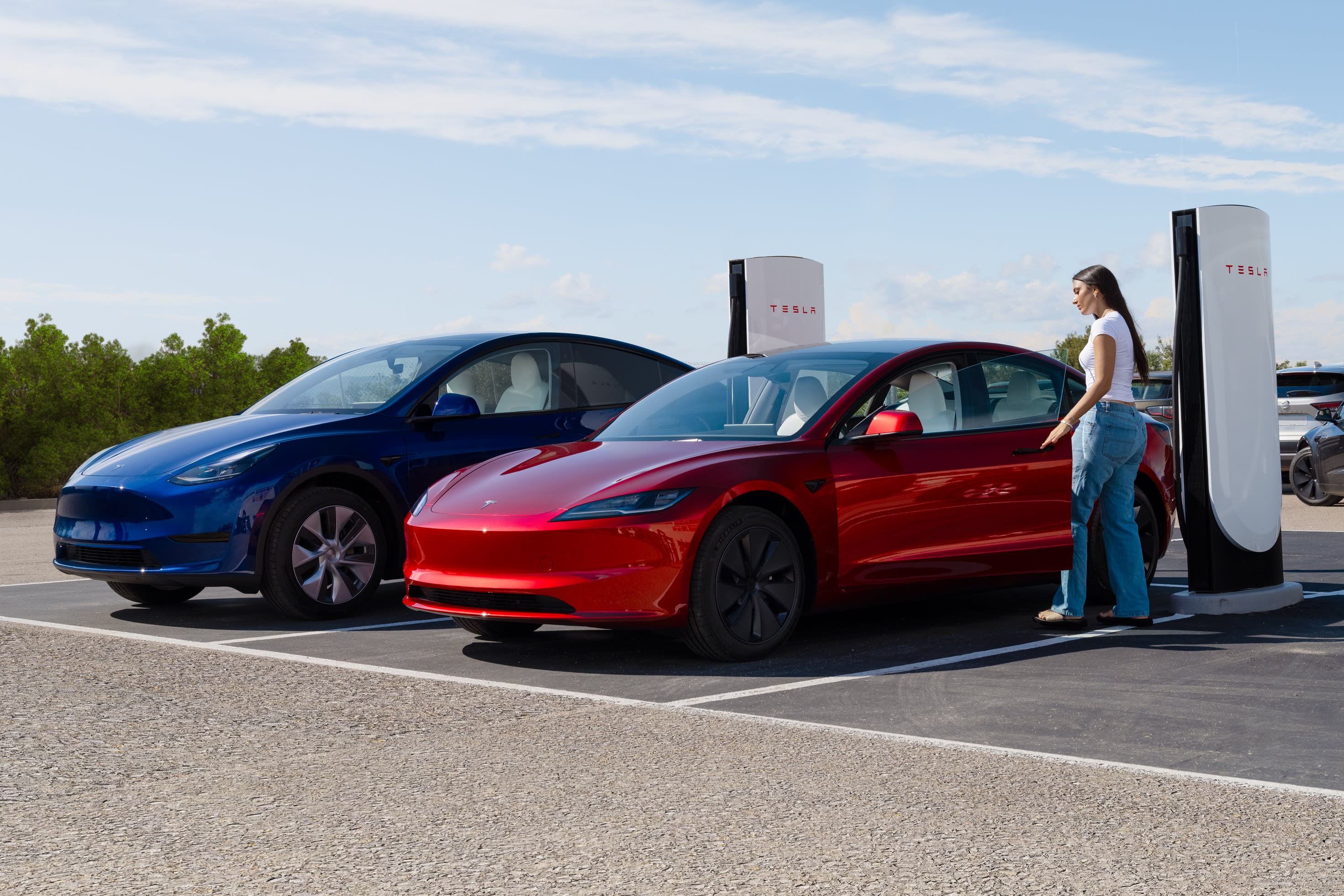
The good news is that Tesla is already addressing this issue. The solution lies in the ongoing global rollout of their next-generation V4 Superchargers.
- V4 Capability: The new V4 units are designed to support vehicle architectures ranging from 400V up to 1,000V. This means that 800V vehicles like the Kia EV6 and Hyundai Ioniq 5 will be fully compatible and should be able to charge at speeds rivaling their native 800V infrastructure (up to 350 kW and potentially 500 kW).
- Timeline: The V4 chargers are gradually rolling out across Europe and North America, but they are currently few and far between.
For the near future, the smartest pick for the quickest possible top-up remains Electrify America, EVgo, or any other 800-volt site where E-GMP cars can charge without compromise. Until the V4 network is fully deployed, prospective EV buyers should conduct a full audit of their location and charger access, as the “nearest charger” won’t necessarily save time.
Also Read – iCaur V27 745-mile range SUV Debuts with 449 HP and Sub-$35K Price


Pingback: Stradale Modena Hellcat Jeep Costs $340K, Built For Off-Road Opulence